
 Subscribe via RSS
Posts Tagged ‘Beaumont-Hamel’
Cycling tour to the Somme and Arras battlefields
Last weekend I had the pleasure of guiding nine gentlemen around the Somme and Arras battlefield on bikes. As a keen cyclist I try and take my bike when visiting the battlefields but this was something different in that it was the first organised specialist cycling trip I had put together.
Our base was the delightfully comfortable Les clés des places in the heart of Arras. The Somme was our destination on Friday, leaving the neglected battlefields of Arras for the Saturday.
Day One – The Somme
Friday morning dawned with beautiful weather. With the bikes fixed to the cars we headed south, crossing the ground voluntarily given up by the Germans as they pulled back to the Hindenburg Line in 1917. Parking at Serre Road Cemetery No.2, we got the bikes ready and headed off.
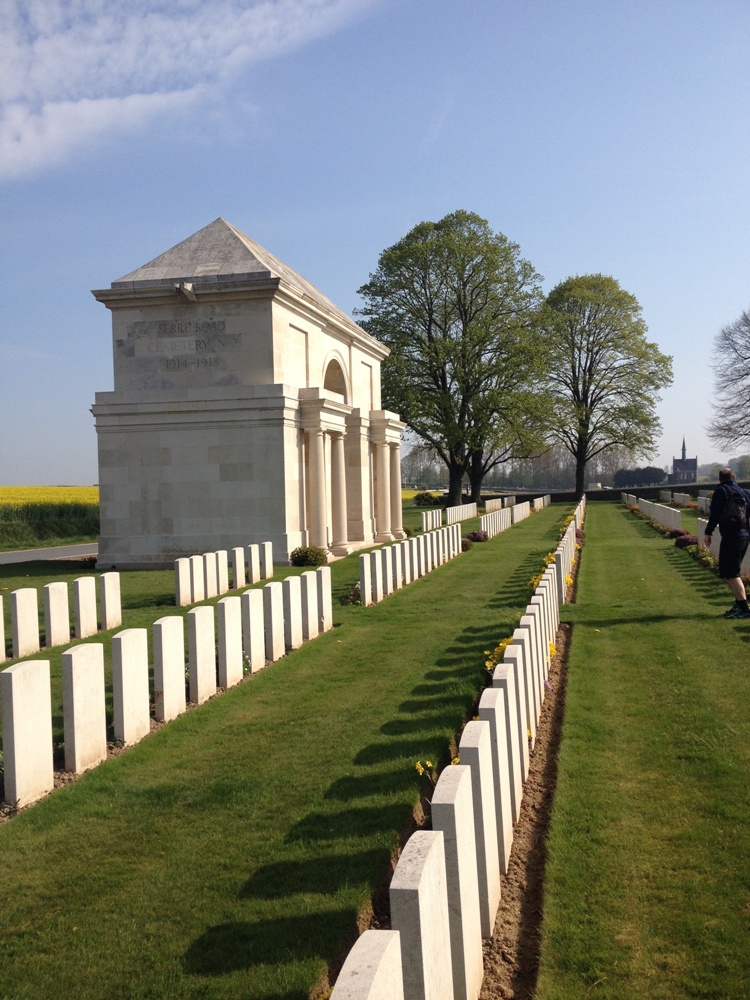
Our first stop on day one – Serre Road Cemetery No 2
I had sent our proposed route to the group beforehand so everyone was aware of the distances involved. After an introduction of the battle and practices of the CWGC at Serre Road No. 2 we headed across Redan Ridge with its isolated ribbon of battlefield cemeteries to the small village of Beaumont Hamel. As one of the Somme’s most well visited sites with a highly evocative story the Sunken Lane offered our first chance to get to grips with the actions of July and November 1916. After hearing a 1st Lancashire Fusiliers officer, Lt E.W. Sheppard’s description of the 1 July attack we rode via Auchonvillers to Newfoundland Memorial Park where we had a good walk around the trench system, visiting all three cemeteries. The descent to Hamel was fun; infinitely more so than the climb up the Mill Road to the Ulster Tower! One of the group had previously served in the Duke of Wellington’s Regiment so I was able to show him the Pope’s Nose and discuss the 1/5th Battalion’s attempt to capture the position in September 1916.
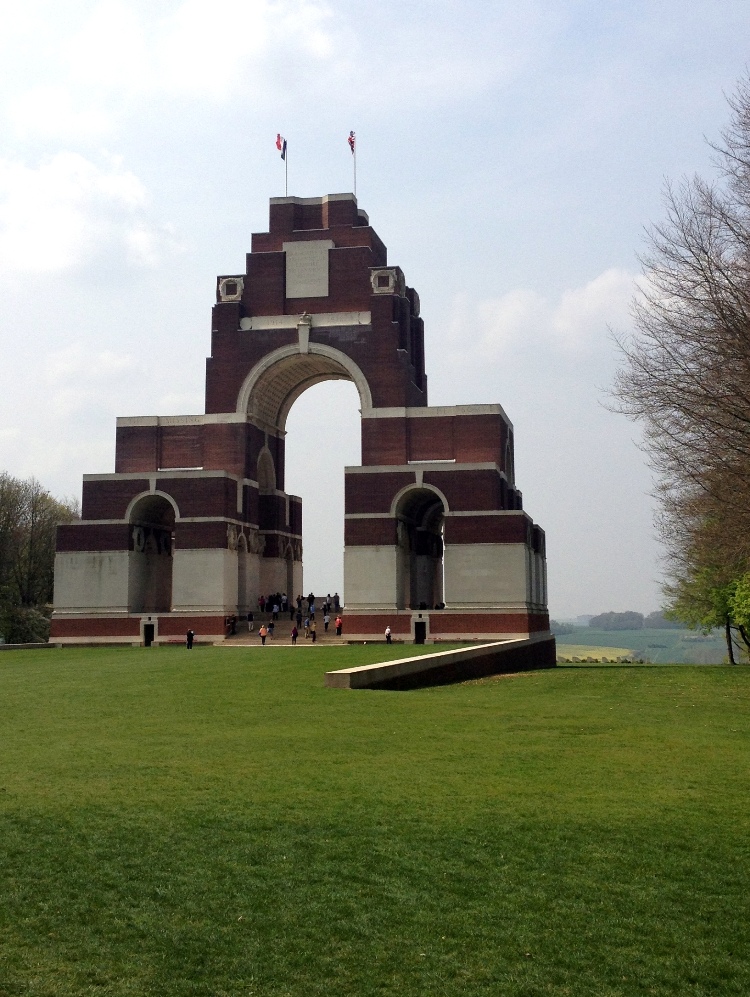
Thiepval Memorial
After a visit to Lutyen’s imposing Thiepval Memorial and our first (and only) puncture of the day we headed via Mash Valley for lunch at the Old Blighty Tea Room in La Boisselle. Subsequent stops included the Lochnagar mine crater, Becourt, Fricourt and Mametz.

Cycling past Bernafay Wood
From the bottom of Dantzig Alley Cemetery we surveyed the undulating ground in front of us, a familiar view to the British in July 1916. Dominating the landscape is Mametz Wood, scene of so much heartache and horror for the 17th (Northern) and 38th (Welsh) Divisions. Our tour continued up to Montauban and Trônes Wood before a stop at Guillemont Road Cemetery where we paid our respects at the grave of Raymond Asquith, 3rd Grenadier Guards.
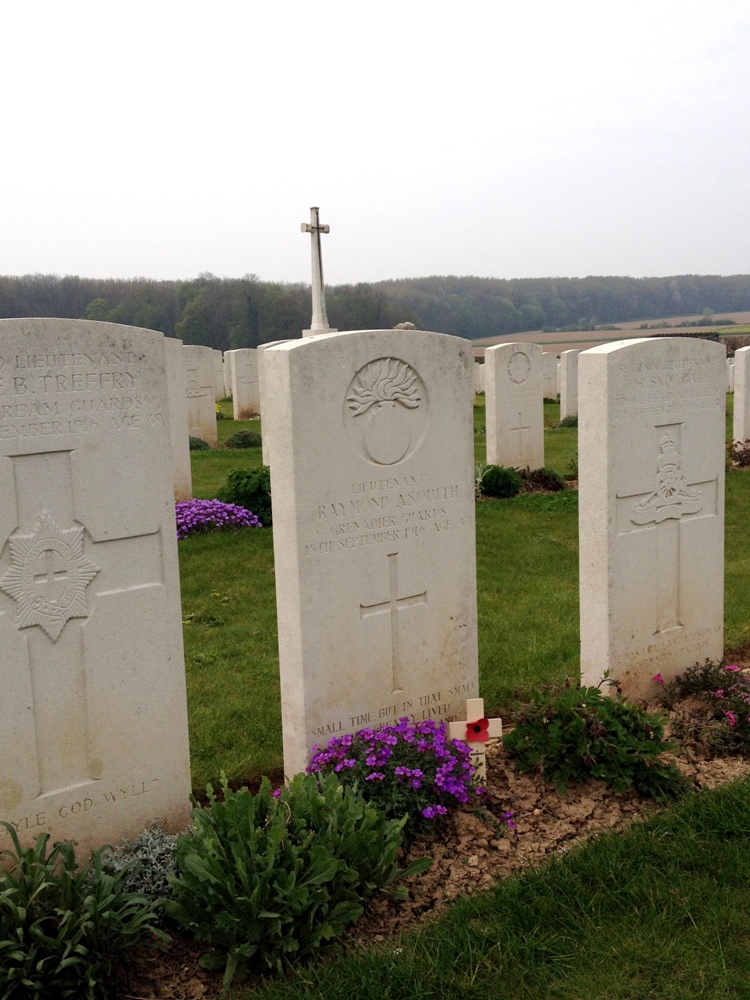
The grave of Raymond Asquith, Guillemont Road Cemetery
Raymond, the son of the Prime Minister H. H. Asquith has been described as ‘one of the most intellectually distinguished young men of his day’. He had been mortally wounded at the start of the Guards’ attack on 15 September 1916 and died on his way to a dressing station.
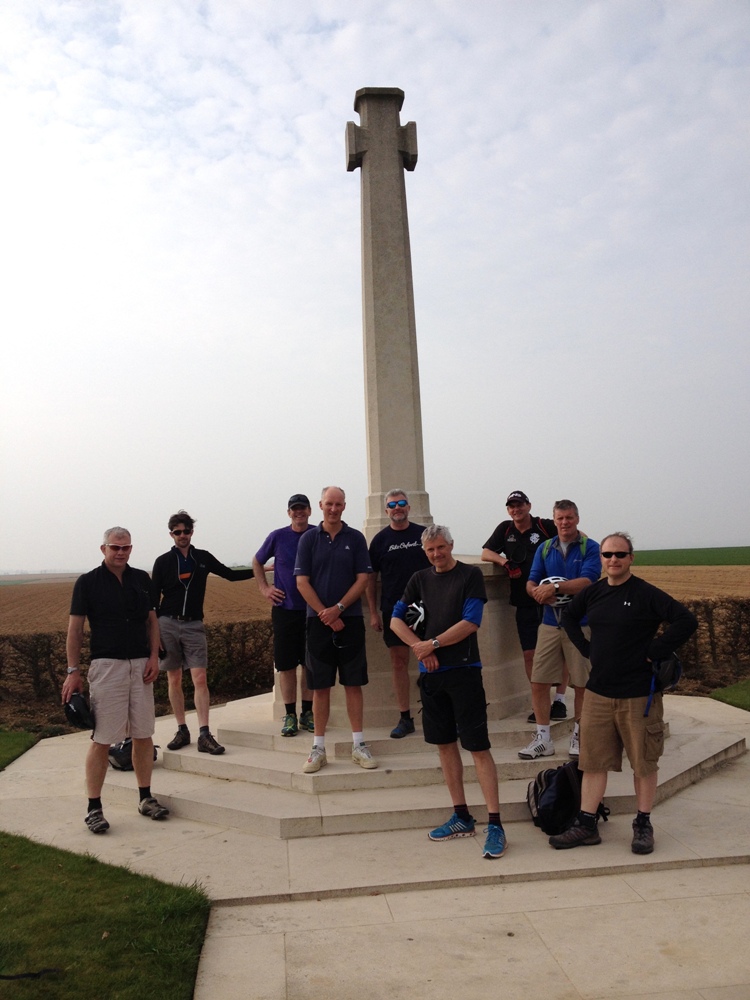
Guards Memorial, Lesboeufs
One of our group was a former Coldstream Guards officer and so we deviated from the original plan, heading to the Guards Memorial between Ginchy and Lesboeufs. The exposed position on the ridge to Lesboeufs is in the centre of the ground over which the Division fought in the second half of September 1916.
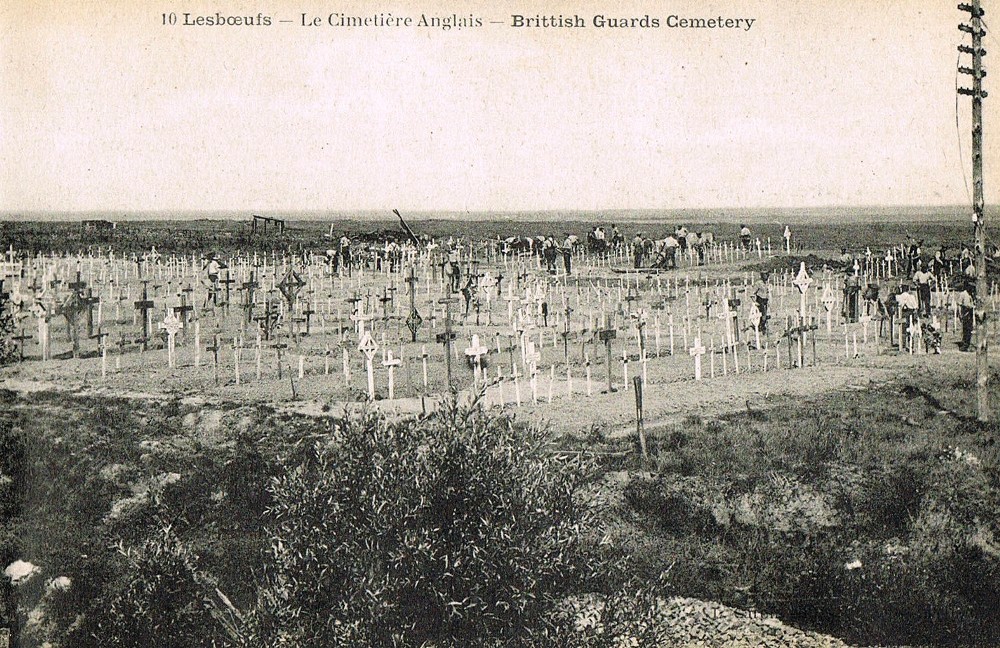
Postwar image of Guards Cemetery, Lesboeufs. The contrast between the haphazard crosses in this postcard and the neat rows of Portland headstones that greet the modern visitor is testament to the skill and dedication of the CWGC.
Our route back across the battlefield took in Delville Wood, looking a perfect picture of peace in dappled sunlight – the polar opposite of summer 1916.
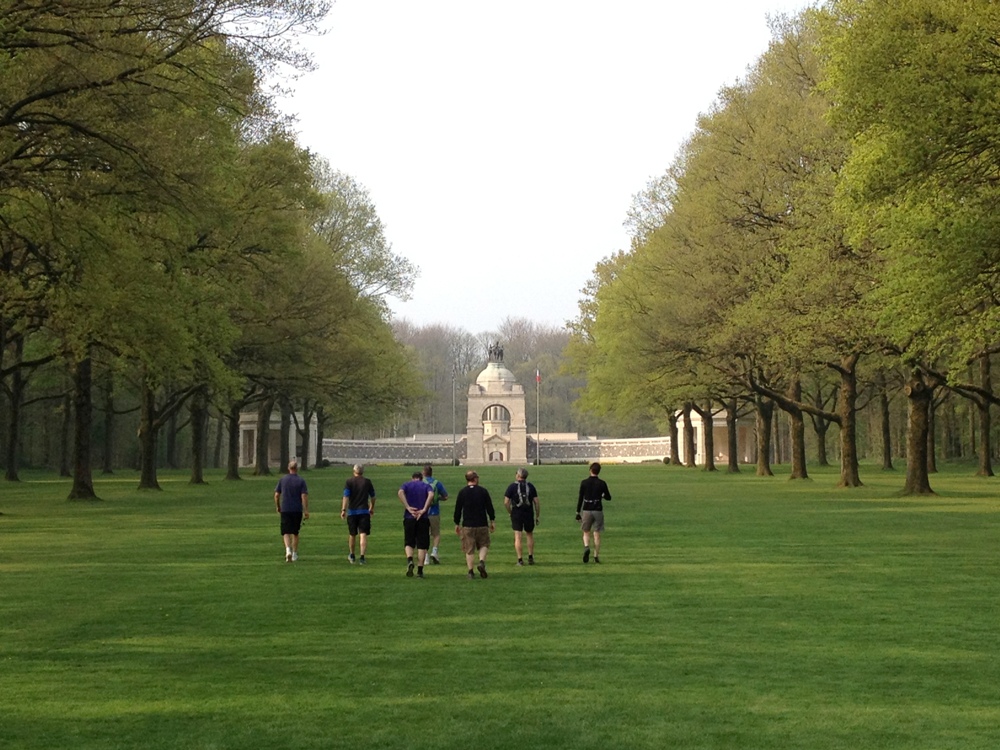
A walk in Delville Wood
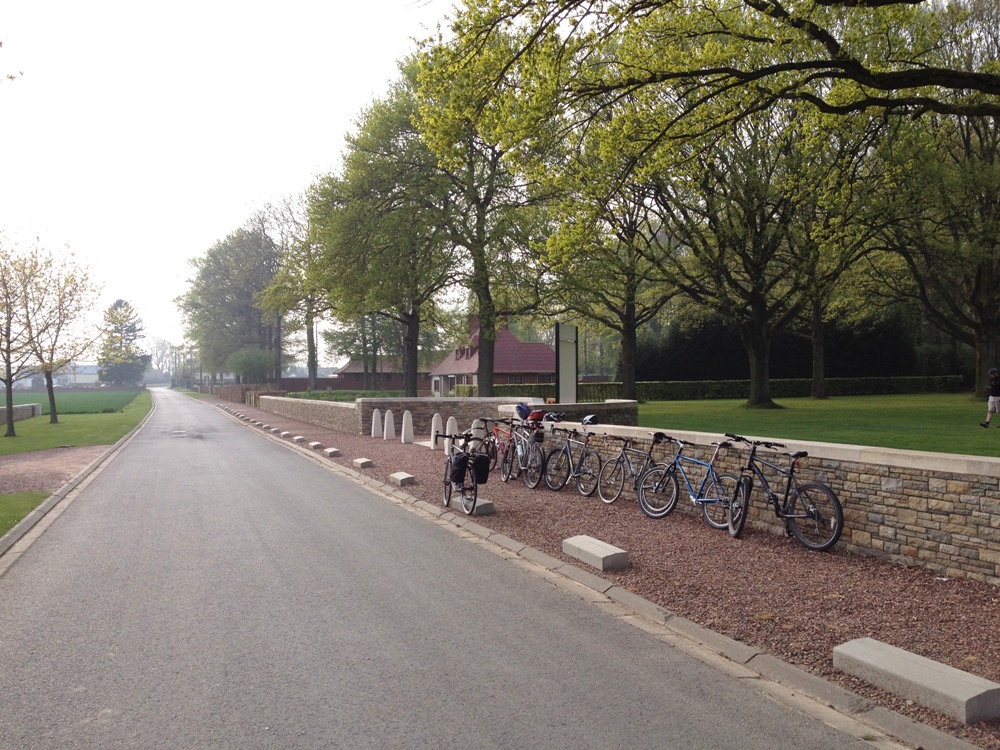
Away from Newfoundland Park and Thiepval the roads were quiet. Bikes lined up at Delville Wood.
Next up was High Wood where I described the ferocious fighting that had raged there through the high summer of 1916. The wood and Switch Line proved such a bulwark to advance that British efforts resorted to siege warfare techniques; employing Vincent and Livens Large Gallery Flame Projectors in the wood along with the use of tunnellers to plant a mine under German positions. In the late afternoon light of a perfect spring day it was hard to imagine the carnage in these quiet mellow fields and woods.
Crossing the Roman road we headed via Courcelette to Miraumont, along the Ancre valley to Beaucourt before a gentle climb up past Ten Tree Alley en route back to the cars. The conversations that night over a much-needed dinner and drinks all touched on the benefits of cycling in helping everyone’s appreciation of the battlefield.
View this route on plotaroute.com
Day Two – Arras
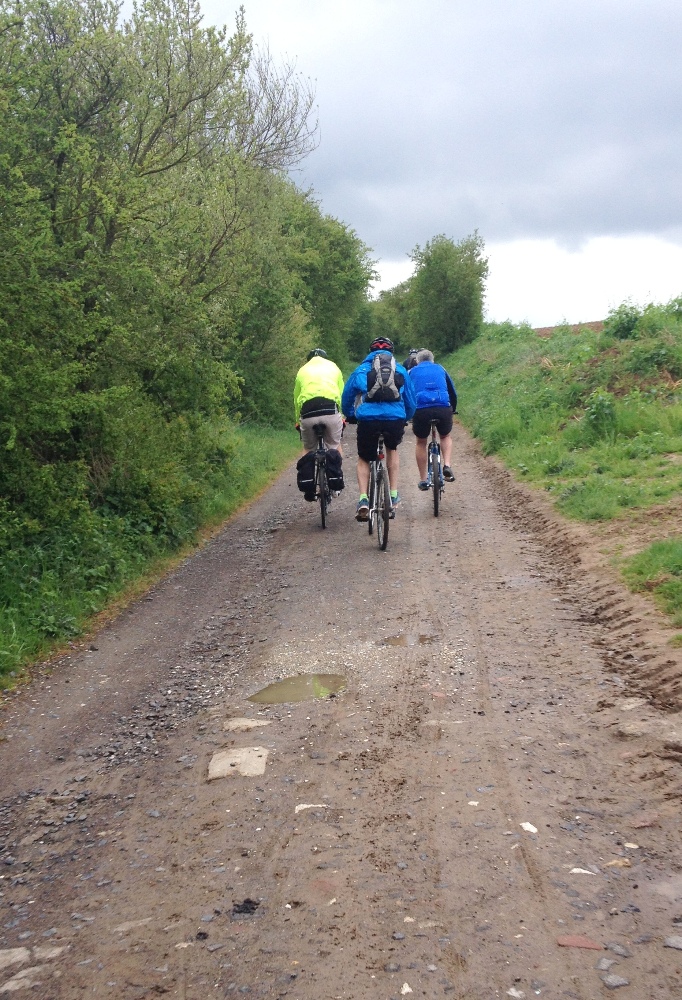
The bumpy track up to Neuville-Vitasse Road Cemetery
We awoke the next morning with slightly aching legs and for some, aching heads. There was no need for cars as we would be setting out directly from our hotel. Whilst the touristy spots of the Somme were packed with coaches and school groups the empty fields around Arras are a very different proposition. I assured our travellers that other than farmers and locals we would have the Arras battlefield to ourselves. Heading south via Beaurains (a bike path runs alongside the road for much of this) and London Cemetery we rode to Neuville-Vitasse, a village which in April 1917 was wired into the German defences with the main Hindenburg Line running just behind it.
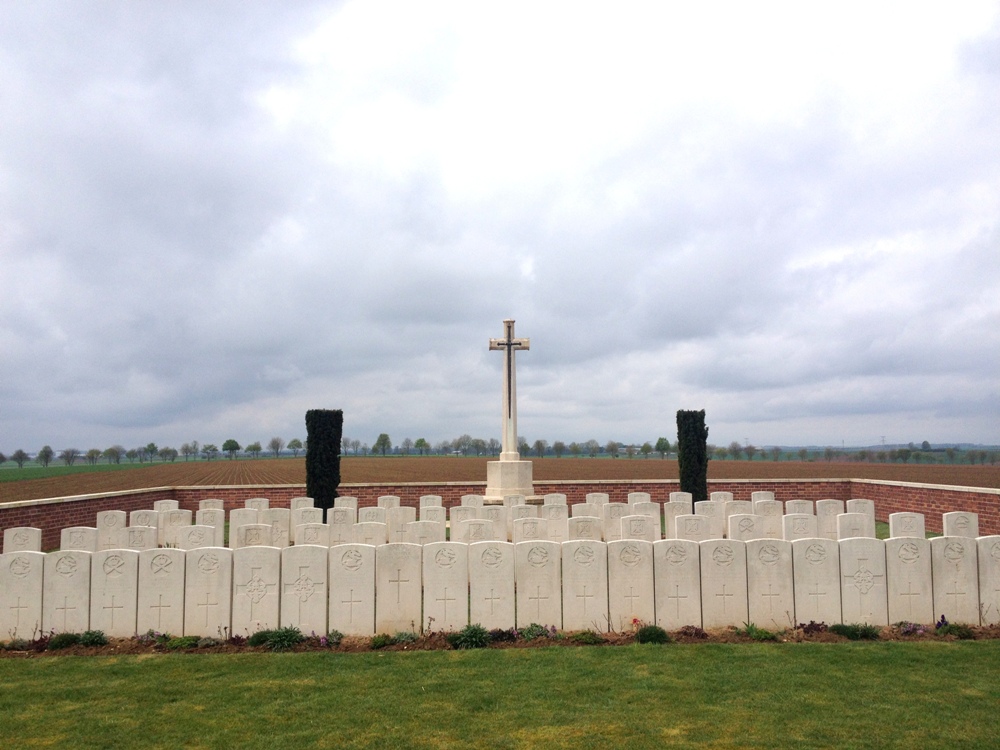
Neuville-Vitasse Road Cemetery
Heading up the bumpy track to Neuville-Vitasse Road Cemetery was fun. From its dominating position I spoke of the 30th Division’s attack on 9 April 1917, the start of the Arras battle. The closely packed graves of the cemetery are predominantly made up of men from the 2nd Wiltshires and 18th King’s (Liverpool Regiment) who suffered grievous losses attacking across this ground.
I explained the connection with Hugh Dennis’s grandfather, Godfrey Hinnels, whom I had researched for the television programme, ‘Who Do You Think You Are?’ Godfrey’s unit, the 1/4th Suffolk Regiment were tasked with salvage and burial duties in the days after the main attack. As such, it was likely he had been involved with the burial of the men that now lay in the cemetery’s walls.
Next up was Cojeul British Cemetery which is the resting place, amongst others, for two Victoria Cross recipients – Horace Waller, 10th KOYLI and Arthur Henderson, 2nd Argyll & Sutherland Highlanders.
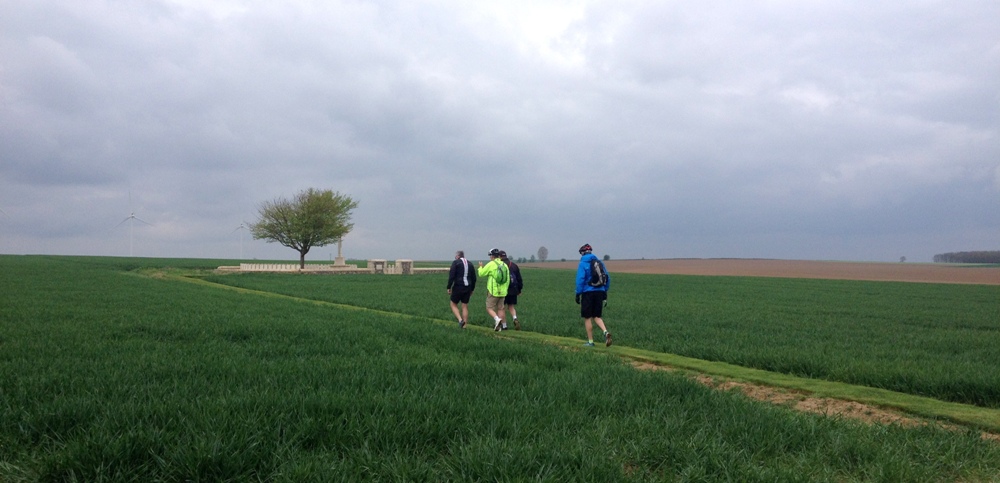
Bikes could only get us so far. Walking the last bit to Cuckoo Passage Cemetery.
Climbing Henin Hill we visited the remaining German pillbox (MEBU) before our next stop, the isolated and beautiful Cuckoo Passage Cemetery. This small battlefield cemetery, full of Manchester Regiment killed on 23 April 1917 lies at the limit of the Manchesters’ advance. I read aloud an account by Private Paddy Kennedy who served with the 18th Battalion describing events that buy mexican xanax day. Many of his comrades lay around us within the cemetery walls.

Group shot at Bootham Cemetery, Heninel
We returned back towards Heninel before picking the road up to Chérisy where I discussed the terrible events of 3 May 1917, the Third Battle of the Scarpe. Described by Cyril Falls in the Official History as ‘a melancholy episode’ the attack that day was an unmitigated disaster for the attacking British forces. British dead for the day reached nearly 6,000 for very little material gain.
Why cycling the battlefields is best…
Travelling by bike is by far the best way to appreciate the landscape; you feel every rise, every dip, every change in gradient. What would be a simple drive in a car takes on more meaning when on two wheels. Your thoughts turn irrevocably to the men whose footsteps still echo through the ground as, stealing a line from Sassoon, ‘they slogged up to Arras with rifle and pack’.

The track from Sun Quarry to Quebec Cemetery between Cherisy and Vis-en-Artois
Continuing towards Hendecourt our focus changed for a short time as I described the Canadian successes of August and September 1918. Stopping at Sun Valley Cemetery I pointed out the formidable obstacles of Upton Wood and The Crow’s Nest (the latter captured with great daring by the 15th Battalion (48th Highlanders of Canada) on the morning of 1 September 1918). Passing Quebec Cemetery we dropped down for our picnic lunch at the idyllic Valley Cemetery between Vis-en-Artois and Chérisy. This spot is the final resting place of a number of highly decorated officers and NCOs of the 3rd Battalion, Canadian Infantry who were killed nearby at the end of August 1918. Amongst the 3rd Battalion men buried here is the 23 year old Lieutenant Edward Slattery, DCM, MM & 2 Bars. From the decorations received whilst serving in the ranks and his tender age he appears to have been quite some soldier.
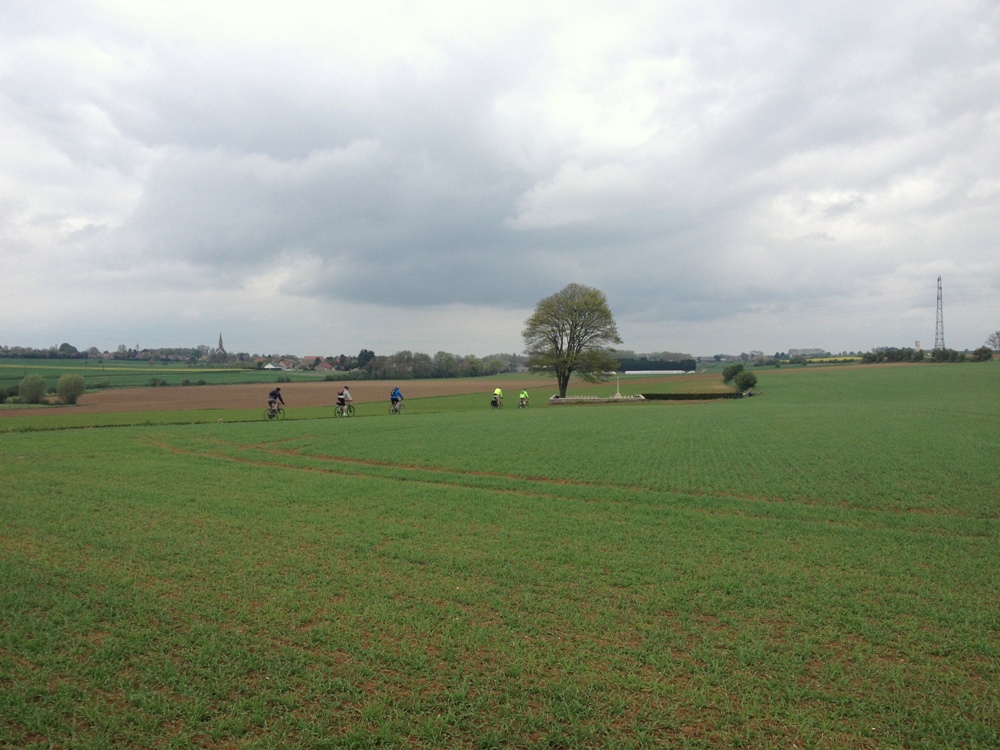
Our lunch stop. Picnic at Valley Cemetery, Vis-en-Artois.
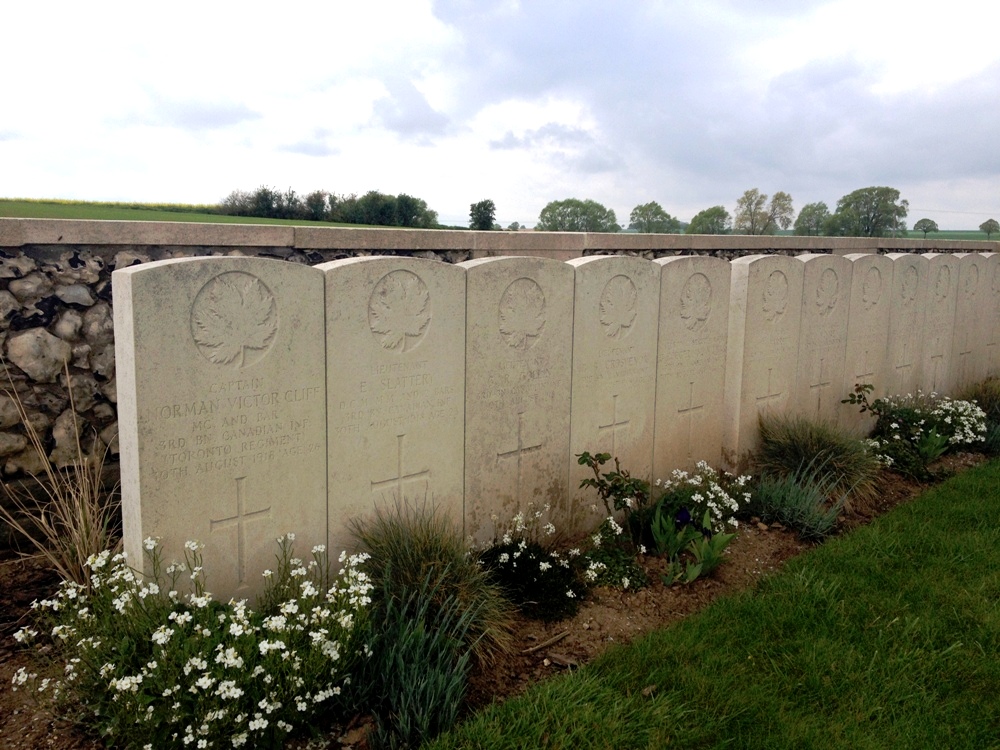
Highly decorated Canadians from 3rd Battalion, Valley Cemetery, Vis-en-Artois
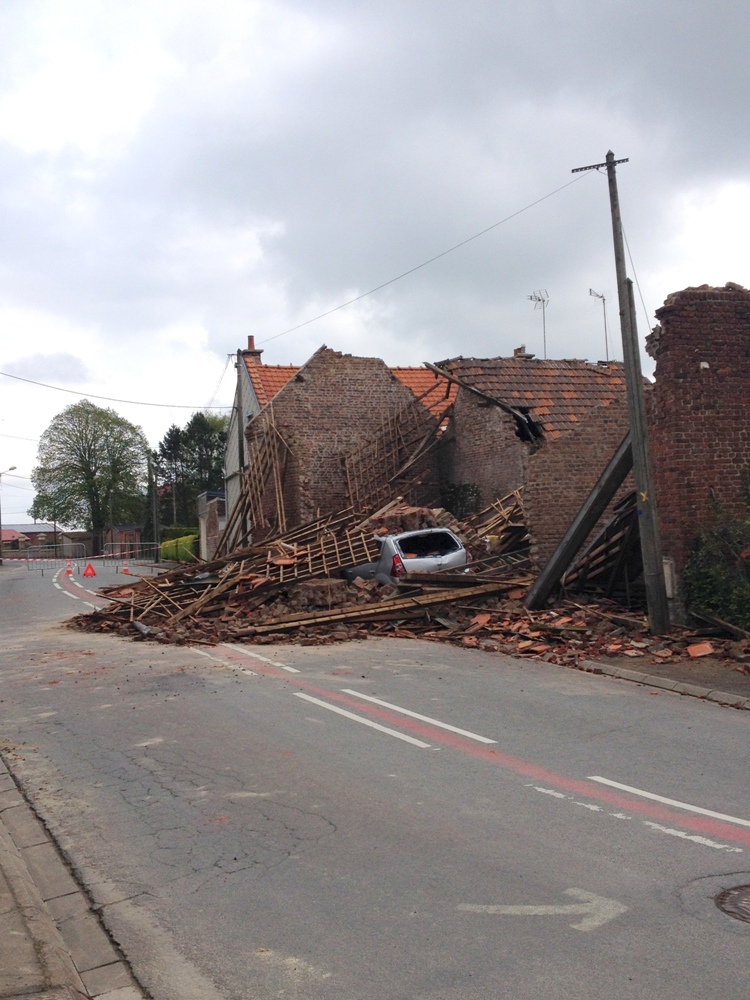
Recently destroyed house, Monchy-le-Preux
Suitably refreshed we headed back towards Guémappe and across the Route National towards Monchy-le-Preux. The road was blocked in the village, the result of a recent building collapse. Undeterred, we headed west where I explained about the village’s capture and the terrible loss of British cavalry in its narrow streets on 11 April 1917.

Newfoundland Caribou, Monchy-le-Preux commemorating the battalion’s action on 14 April 1917
Having visited the impressive 37th English Division memorial and the Newfoundland Caribou in the village we rode eastwards, up Infantry Hill where I was able to regale the party with the story of the ‘Men who saved Monchy’: the disastrous 14 April 1917 assault by the Newfoundlanders and 1st Essex Regiment.
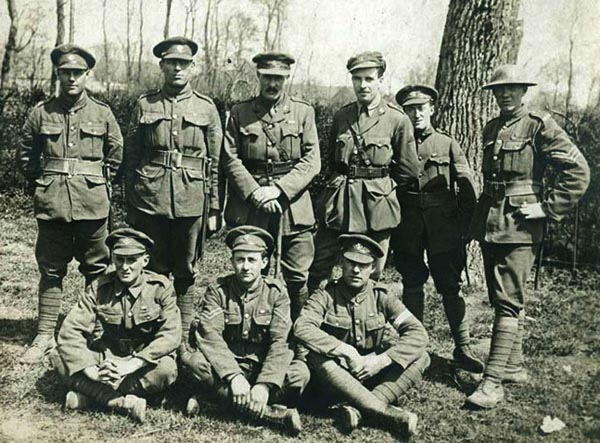
The men who saved Monchy
Infantry Hill is a special spot for me, the scene of so much concentrated fighting and yet, like so much of the Arras battlefield, it remains rarely visited. It was in these fields on 3 May 1917, that disastrous date for the British Army, that one of our group’s great uncles, Private Thomas Clark, 8th East Yorkshire Regiment was killed. Standing close to the spot where the 8th East Yorkshires went over the top I was able to explain the actions that day, reading from the war diary to enable everyone to appreciate the disaster that befell the attacking British troops and the magnificent defensive performance of the German forces.
Extract from the 8th East Yorkshire Regiment after-action report for 3 May 1917 action on Infantry Hill, east of Monchy-le-Preux
The Battalion moved forward at Zero hour [3.45am] but owing to the heavy smoke combined with the darkness they found it difficult to move on any definite point or points.
A platoon commander of the right-hand leading company found himself advancing up a small ridge which is to the south of the copse in O8 Central where he ran up against machine-gun fire. He was joined by a KSLI officer and some men. They moved forward together, the KSLI officer was killed as well as a number of men and as the place was bristling with machine guns and the copse occupied by snipers he stayed down in shell holes, returning at night to HILL TRENCH with 11 men on receipt of orders to do so from Battalion HQ…
…The men were in good heart and moved forward readily. I attribute the results to the heavy smoke, combined with the darkness which prevented people locating their points of direction. In addition to this the enemy barrage was very heavy to which must be added the very effective use of machine-gun both from the front but also enfilading attacking troops.
Casualties: 35 killed, 161 wounded, 39 missing
After some time to contemplate we returned to the village before riding down the Scarpe Valley to Fampoux where we looked at its capture on 9 April 1917 by the 2nd Duke of Wellington’s Regiment. Next up was another special spot; the Seaforth Highlanders cross overlooking the Hyderabad Redoubt, Greenland Hill and Roeux. Whilst there I explained the disastrous 11 April 1917 attack and read aloud the wonderful description left by Seaforth Highlander Private James Stout of events that day.
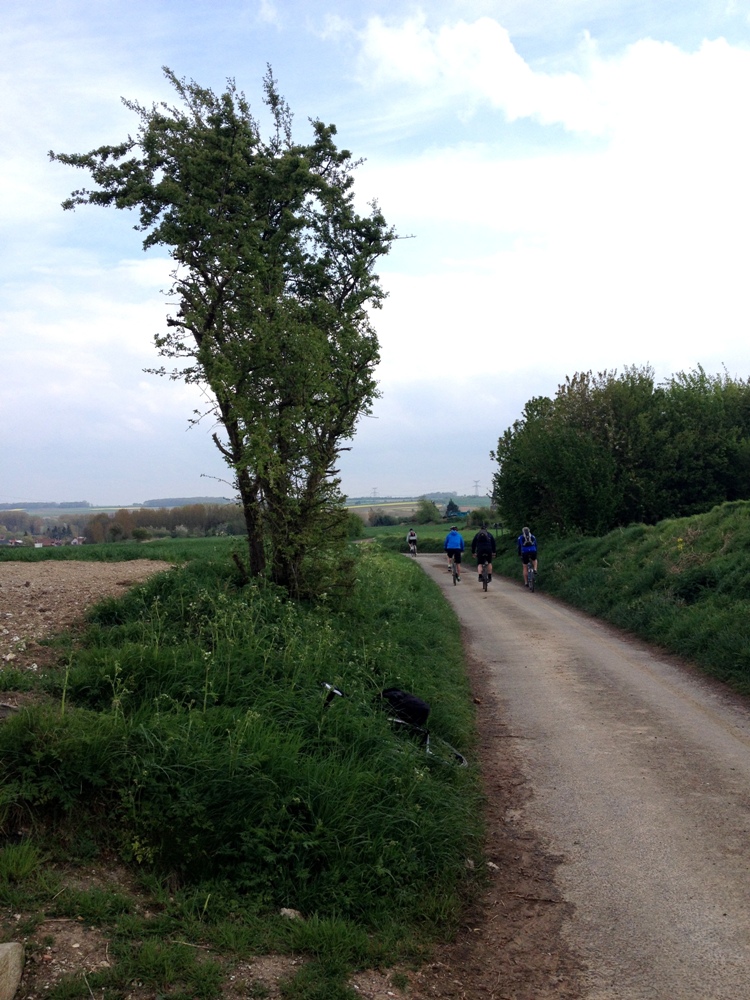
Descending the Sunken Lane, Fampoux
It is a great shame there is nothing at the former site of the Chemical Works, so bitterly fought over during the battle to show the ferocity of fighting and losses sustained to secure its possession. The site is now a Carrefour mini supermarket where we bought a cool drink and snacks before our ride via Athies back into Arras.
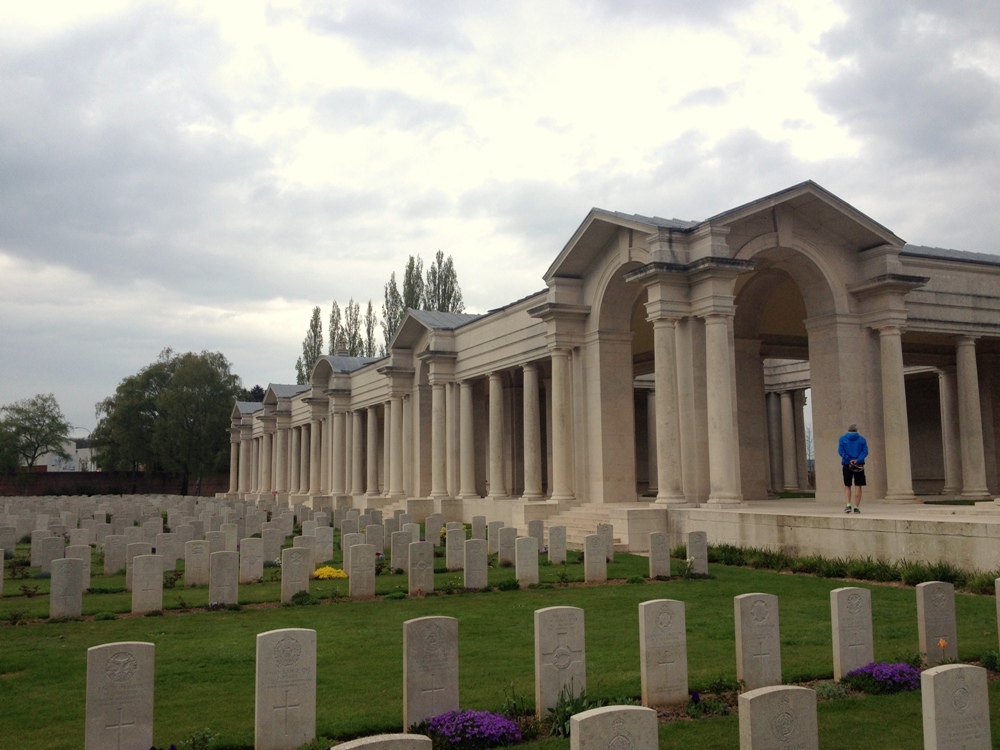
Faubourg-d’Amiens Cemetery & Arras Memorial
Our final stop of the day was the Arras Memorial where Private Thomas Clark and a further 34,765 men are commemorated. One of the group found the grave of his great uncle in the adjoining Faubourg D’amiens Cemetery. Tired but satisfied at the ground we had covered we headed back to the hotel before a good evening meal and much chat.
View this route on plotaroute.com
Day Three – A quick look north of Arras and back to Blighty
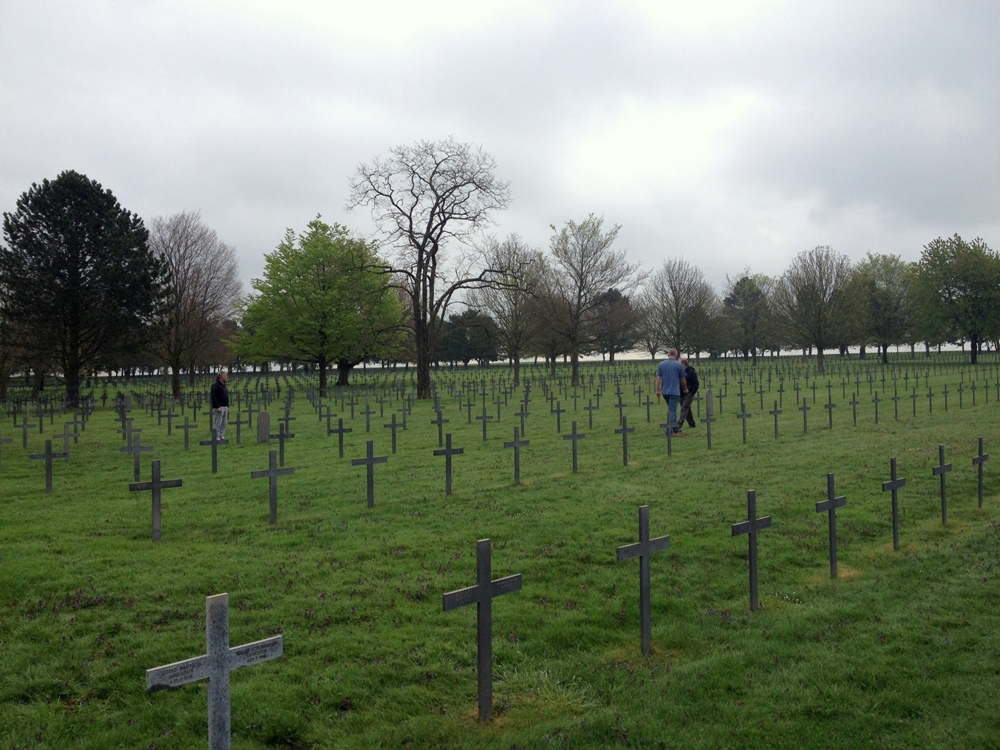
Soldatenfriedhof Neuville-St. Vaast
Our final day was overcast and rainy. Bikes were attached to cars before we visited the huge German cemetery at Neuville St-Vaast and French cemetery at La Targette. Next up was the preserved battlefield on Vimy Ridge before our final stop at Walter Allward’s masterpiece, the Vimy Memorial atop Hill 145.
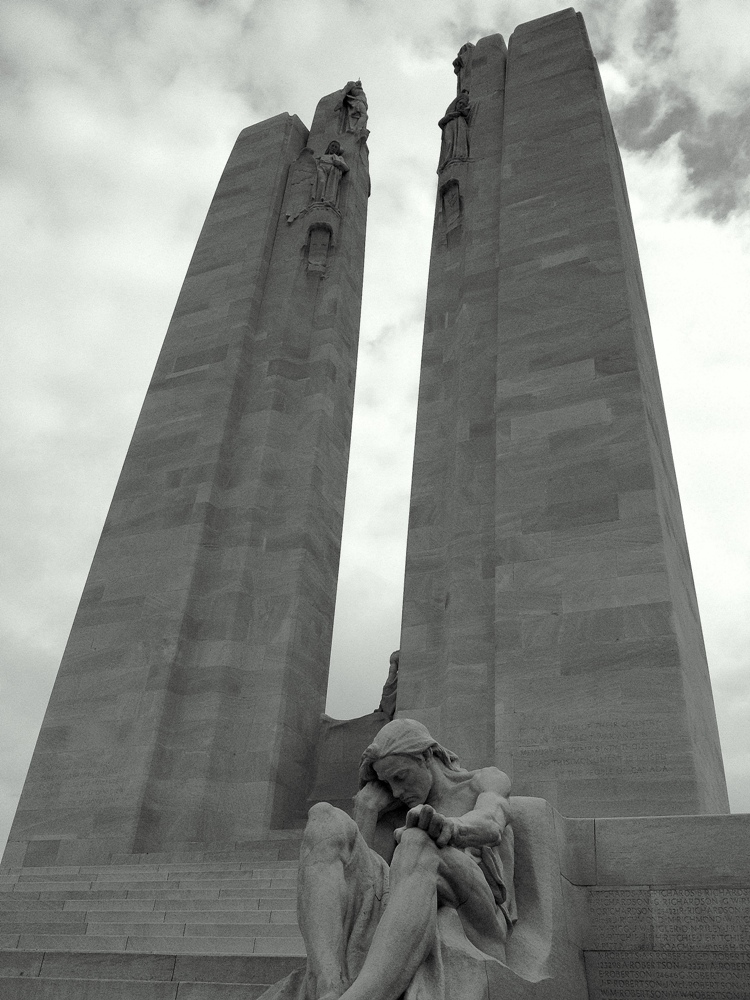
Allward’s masterpiece – the Vimy Memorial
My thanks to the wonderful group who I accompanied and for their generosity and looking after me so well.
If you are interested in a battlefield tour by bike, either as a group or by yourself then please get in touch via the Contact Page. I would be happy to put an itinerary together for any British battlefield and am happy to cycle up to 50 miles/day. However, there is so much to see that 25-40 miles/day is the ideal distance.
A few weeks ago I took a couple, Mac & Marian from New Zealand, around the battlefields. They had asked me to show them around the Western front for three days before catching a train to Paris for the next leg of their trip. What made this trip so special was that we were following Corporal Andrew McDonald, 6th Seaforth Highlanders. Andrew McDonald died of wounds on 13 April 1917 and is buried at Etaples Military Cemetery. His battalion was involved in the opening stages of the Battle of Arras. It is highly probable that he was wounded when the battalion ‘went over the top’ in front of Roclincourt at 5.30am on 9 April 1917. I had previously written about the area in a piece entitled 6th Seaforth Highlanders at Roclincourt – The Battle of Arras, 9 April 1917.
After picking up Mac & Marian at Folkestone we took the tunnel over and then headed along the coast to Etaples. They told me that they had visited Second World War cemeteries before but I could see how moved they were when we pulled up at Etaples. The cemetery, the largest Commission cemetery in France, was designed by Sir Edwin Lutyens. The scale of the place defies belief and really deserves to have more visitors. After visiting Andrew’s grave and laying a small cross – something that Mac had been wanting to do for years – we spent a couple of hours just walking around this vast and sobering cemetery – the final resting place for 11,500 men and women.
Mac & Marian wandering past the endless graves at Etaples Miltary Cemetery
Retracing our steps back up the motorway we headed to Ypres where I took them to various spots around the salient including Pilckem Ridge, Polygon Wood, Robertson’s Bridge at Reutel, The New Zealand Division Memorial at Gravenstafel, Tyne Cot Cemetery and finally the German Cemetery at Langemarck. We headed back to our excellent B&B and then back out to Ypres so we could attend the Last Post ceremony at the Menin Gate. We ate in the square before heading back to the B&B for a good sleep after a long day.
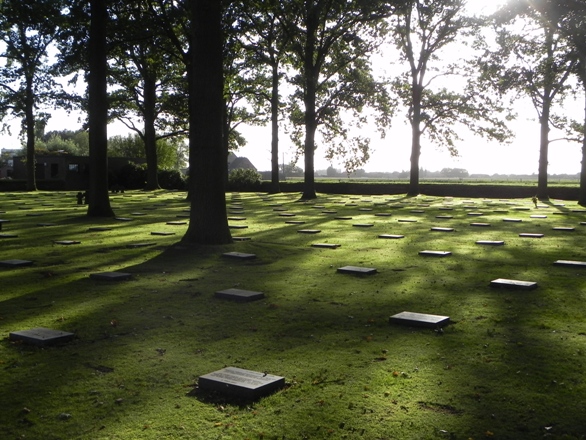
Evening sunlight in Langemarck German Cemetery
The next day was to be spent around the Arras battlefields. After a mammoth breakfast we set off south, firstly stopping at Nine Elms Cemetery at Poperinghe to pay our respects at the grave of David Gallaher, captain of the All Blacks.

David Gallaher, All Blacks captain at Nine Elms, Poperinghe
We had a quick stop at Peckham and Spanbroekmolen, two of the huge craters formed by the Messines mine explosions on 7 June 1917 before heading south via Ploegsteert and into France to our next stop at La Chapelle-d’Armentières. It was here, at the site of the Railway Salient that Andrew McDonald’s brave actions during a trench raid on 15 September 1916 earned him the Military Medal. I was able to stand Mac at a spot looking down the railway line to where the German salient jutted out into No Man’s Land and explain the events of that night. We then continued south, stopping at Noeux-les-Mines Communal Cemetery & Extension to pay our respects at Marian’s great uncle, David Watson’s grave. He had been killed during the Battle of Loos whilst serving with the 1st Battalion, Cameron Highlanders. Leaving the coalfields of Gohelle behind us we began our look at the Arras battlefields.

La Targette British Cemetery with endless rows of French graves behind
I started with a stop at the village of La Targette with its staggering French and German cemeteries. If ever there is a place to fully appreciate the extent of losses suffered by our French allies and German foe then this is it. Neuville St Vaast Soldatenfriedhof has over 44,000 German buried within its grounds – a truly sobering place. We then headed to Vimy Ridge where, after a tour of the trenches, we headed to Walter Allward’s magnificent Vimy Memorial.
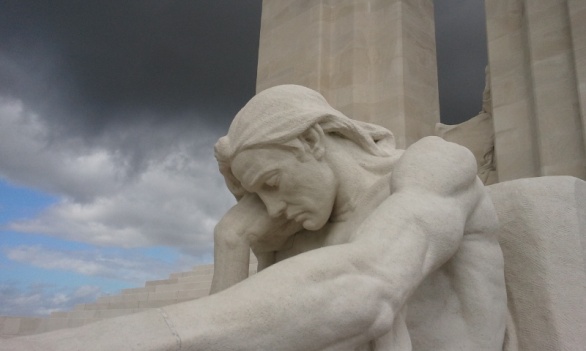
Vimy Memorial
Next up was a special visit to the exact spot outside Roclincourt where ‘C’ Company, 6th Seaforths attacked on 9 April 1917. It was in the fields between the British front line and second German line (the area now contains the beautiful Highland Cemetery) that Andrew McDonald most likely received his fatal wound.
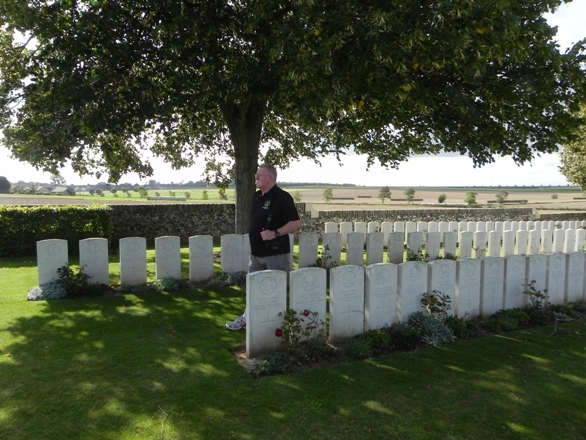
Mac at the graves of 6th Seaforth men buried in Highland Cemetery, Roclincourt
After an emotional stop at Highland Cemetery to visit other 6th Seaforth men we continued our tour through St Laurent Blangy and Athies to the Seaforths Cross at Fampoux. We then headed to the infamous village of Roeux (heavily fought over by the 51st Division in April and May 1917) and crossed the Scarpe to Monchy-le-Preux, Infantry Hill and then back down the Arras-Cambrai road to the superb Carrière Wellington tunnels. Our final stop of the day was at the Faubourg d’Amiens Cemetery & Arras Memorial to the Missing where, bathed in evening sunlight, we wandered at our leisure. After a meal in the Grande Place we headed off for a much-needed sleep.
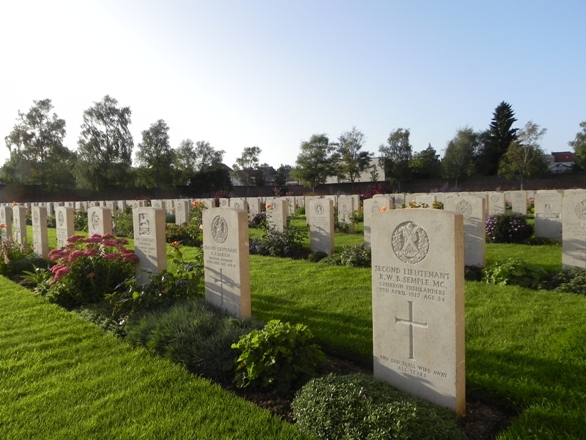
Faubourg d'Amiens Cemetery, Arras
The following morning saw us continue south down to the hallowed ground of the Somme battlefields. Mac & Marian had asked for unusual stops so, en route, we stopped at the quiet Ayette Indian & Chinese Cemetery.
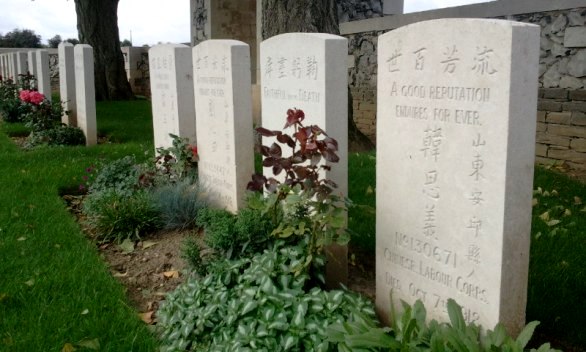
Graves in Ayette Indian & Chinese Cemetery
Continuing south we visited Sheffield Memorial Park at Serre where I explained about the destruction of the Pals battalions of the 31st Division on 1 July 1916, the First Day of the Somme. We then headed over the Redan Ridge to Beaumont Hamel where, as well as looking at the disastrous attack by 29th Division troops on 1 July I gave a detailed explanation of the 6th Seaforth’s role in 51st Division’s successful attack on the village bastion on 13 November. We then visited Mailly Wood Cemetery to visit the graves of 6th Seaforths men killed in that attack. Most notably I had wanted them to visit the grave of 2/Lt Donald Jenkins MC. He had won his Military Cross in the same raid that earned Andrew his Military Medal – in fact, both men had crossed No Man’s Land three times bringing back wounded men on each occasion. Undoubtedly, despite the officer/other rank divide there would have been some connection between Andrew and this officer now lying at peace in Mailly Wood Cemetery.
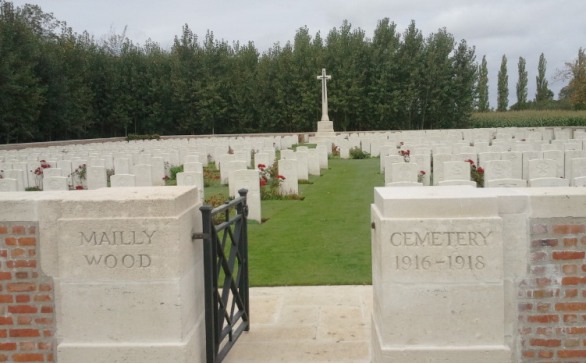
Mailly Wood Cemetery
Other stops that afternoon included a good stroll around Newfoundland Memorial Park, the Ulster Tower and Thiepval Memorial to the Missing. Having stopped at Mash Valley I took Mac & Marian on a private tour of the Glory Hole at La Boisselle (http://www.laboisselleproject.com/) before our final stops of the day at the Caterpillar Valley Cemetery for the New Zealand Memorial to Missing from September/October 1916 and the New Zealand Division Memorial at Longueval.

Early evening at Caterpillar Valley Cemetery. A ray of sun pierces through the clouds to strike the ground.
Passing High Wood I was able to point out the position of Seaforth Trench, dug by 6th Seaforths in July 1916 before heading off to our B&B at Flers for a well deserved beer, meal and chat.
The final day dawned with beautiful sunshine and so, rather than dropping Mac & Marian off in Amiens as had been agreed, I took them just down the road to Delville Wood and the South African Memorial. We were the first ones to visit that day and the atmosphere and light were quite superb.
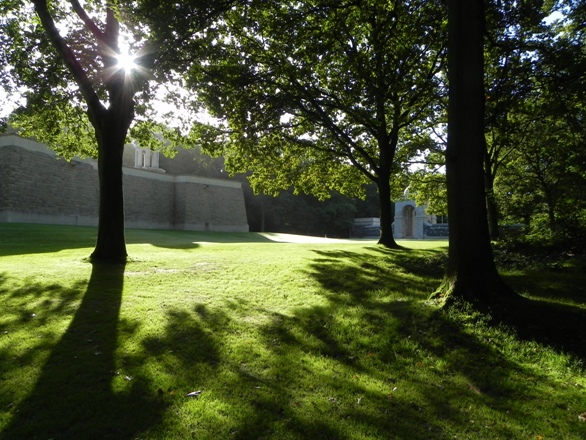
South African Memorial, Delville Wood
After a circuitous tour to Ginchy, Guillemont and Montauban I stopped at the site of the Carnoy craters to tell them about the successful use of the Livens Large Gallery Flame Projectors employed there on 1 July 1916. Moving on to Amiens, we visited the splendid cathedral before I bade them a fond farewell at the railway station. It was another trip to be remembered with lovely people – thanks Mac & Marian for making it such a great time for me too.
More photographs from this trip can be seen on my dedicated Flickr page: http://www.flickr.com/photos/67774984@N03/sets/72157627598624551/
“Thank you for a fantastic trip in September 2011. We were lucky enough to travel with you for three and a half (far too short) days and experience your enthusiasm and passion for WW1 and the Somme first hand. We needed a lot longer. On your website you mention Corporal Andrew McDonald. He is my husband’s Great Uncle lost in 1917. During our time with you he came back to life and it was marvellous to be able to tread the same ground that he walked and to see similar sights. The report that you provided to us will hopefully inspire some other family members to travel to France and Belgium and to utilise your knowledge and enthusiasm for the Western Front and the Somme. You were willing to take us out of our comfort zone and show us areas, memorials and cemeteries that we had no idea could exist from the smallest to the largest including German, Indian, Chinese, Kiwi, Aussie, French, British, South African, Canadian etc. More than we had hoped for or realised that we would have ever seen. Thank you for your ability to generate interest and create great memories.
We would suggest that anyone who contemplates visiting Gallipoli and the Somme, visit Gallipoli first as the memories of France and Belgium will be stronger than those of Gallipoli. Jeremy was a fantastic guide who took care of us and took us to places we could never hope to see or find on our own. His contacts, his advice, the accommodation he organised and all aspects of the trip were 110%. Thank you for your time and efforts and we both wish you well for the future. Keep guiding.” Marian & Mac Macdonald, Pukekohe, New Zealand
Last week I spent an enjoyable two days on the battlefields with four clients. For all but one of them it was their first visit to the western front. We met bright and early on Monday morning at the Channel Tunnel terminal and travelled over in convoy down to Arras.
Arras
Our first stop was in the superb Carriere Wellington. Our guide, the irrepressible Pascal, was as keen as ever and coupled with my preliminary talk on the Battle of Arras and the ten minute ‘taster’ film shown prior to going underground my group got a good initial grasp of the battle in April & May 1917. Following our hour underground we visited the Arras Memorial to the Missing and Faubourg d’Amiens Cemetery. The sheer scale of men with no known grave from the Arras battlefields had the usual sobering effect.
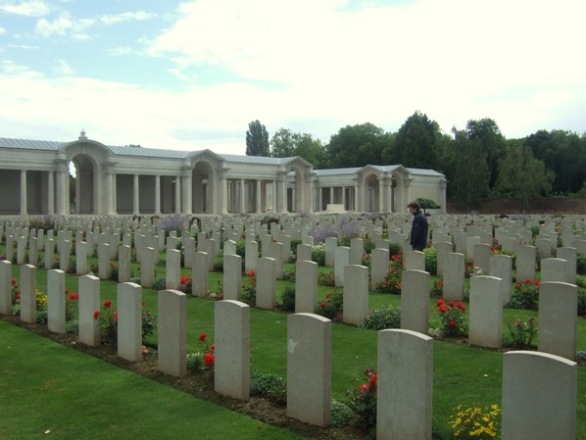
Faubourg d’Amiens Cemetery with the Arras Memorial in the background
Being so close we popped into the Mur des Fusillés and paid our respects at the site where 218 French resistance and civilians were shot by the Germans in the Second World War. I have always found it an eerie place with a strange atmosphere all of its own.
We then headed out to the Great War battlefields around Arras with the first stop the Point du Jour for a visit to the military cemetery and the graves of the 10th Lincolns men (Grimsby Chums) found in 2001 and the impressive 9th (Scottish) Division memorial re-sited next to the cemetery. After a picnic lunch in the cemetery we headed back into Athies and along to Fampoux. The village marked the point of furthest advance into German lines on 9 April 1917. We stopped at the sunken lane to look at the attack of the 2nd Seaforth Highlanders and 1st Royal Irish Fusiliers (10th Brigade, 4th Division) against Greenland Hill and Roeux on 11 April 1917. Whilst at the Sunken Lane Cemetery overlooking the sloping fields down to Roeux I told my group of Donald MacKintosh and the actions that earned his Victoria Cross. We then drive through Roeux past the site of the Chemical Works (now a Carrefour mini-supermarket) and around to Brown’s Copse Cemetery to pay our respects at MacKintosh’s grave.
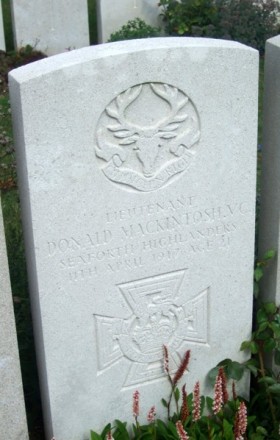
The grave of Donald MacKintosh VC in Brown’s Copse Cemetery, Roeux
Back on the road we crossed the Scarpe and headed up to Monchy-le-Preux. I pointed out the positions of various trench lines and explained about the catastrophic failure of the 3 May attack, the Third Battle of the Scarpe. We then had a drive around Monchy, stopping at the stunning 37th Division memorial and the Newfoundland Caribou Memorial which is built on the top of a British artillery observation post constructed in August 1917 by 69 Field Company RE. Our day’s battlefielding was completed with a stop east of the village on Infantry Hill where I told of the disastrous 14 April attack by 1st Essex Regiment and the aforementioned Newfoundlanders. Both battalions were destroyed in carefully planned German counter-attacks – the first use of the new doctrine of ‘elastic’ defence. Monchy was at the mercy of the Germans and the situation was only saved by the quick thinking action of Lt-Colonel James Forbes-Robertson and a small group of men – all decorated for this action and known thereafter as the Heroes of Monchy.
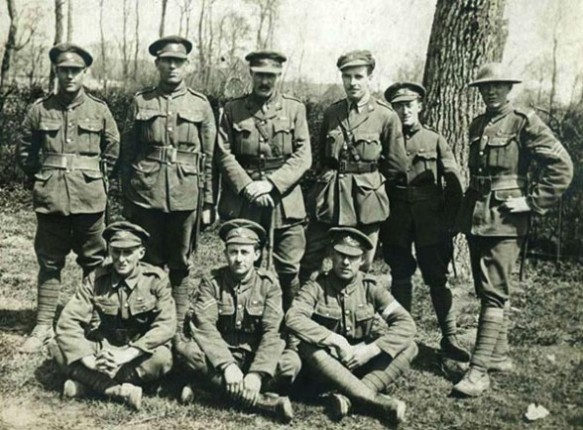
The Men who saved Monchy – all decorated for their part in the action
We had a pleasant walk up Infantry Hill to the Mound and then headed back into Arras to pick up my car and then headed down to the Somme for a welcome meal and good night’s sleep.

The view of Infantry Hill from Green Lane. Bois du Vert sits on the horizon to the right of the picture.
The Somme
The next day was spent touring the 1916 Somme battlefield. Very much aware that one can only skim over the surface with one day around such a large and important battlefield we were up early to make full use of the daylight. After an explanation in the car park on the battle using various maps we set off north up to Serre, the most northerly point of continuous attack on 1 July 1916. En route we pulled the car in at the Ulster Tower for a view across the Ancre and an explanation of events in the northern part of the battlefield. The Gospel Copses at Serre were deserted and we had Sheffield Memorial Park all to ourselves as I explained about the failure of the attack and the losses incurred by the northern Pals battalions of the 31st Division.
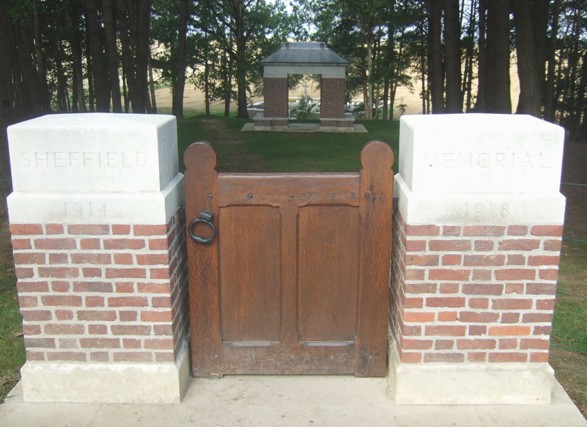
The entrance to Sheffield Memorial Park with Railway Hollow Cemetery in the background.
After some time in Railway Hollow Cemetery we stopped at Serre Road Cemetery No.2 (the largest on the Somme battlefield) and the across the Redan Ridge to Beaumont Hamel, and the infamous sunken lane, the jumping off point for the 1st Lancashire Fusiliers that fateful morning. We then retraced our steps and stopped for a pleasantly quiet walk around the preserved trenches of Newfoundland Memorial Park with its Caribou and even more imposing memorial to the 51st (Highland) Division, conquerors of Beaumont Hamel in November 1916. Our next stop was to the magnificent Thiepval Memorial to the Missing, a must for any battlefield visitor to the western front. Heading via Pozières of Australian fame we reached the Old Blighty Tea Rooms at La Boisselle for a deserved late lunch.
The afternoon began with a detailed tour around the Glory Hole at La Boisselle and a good walk around the site looking at the craters and depressions marking the trenches followed by a stop at the unmissable Lochnagar Crater.
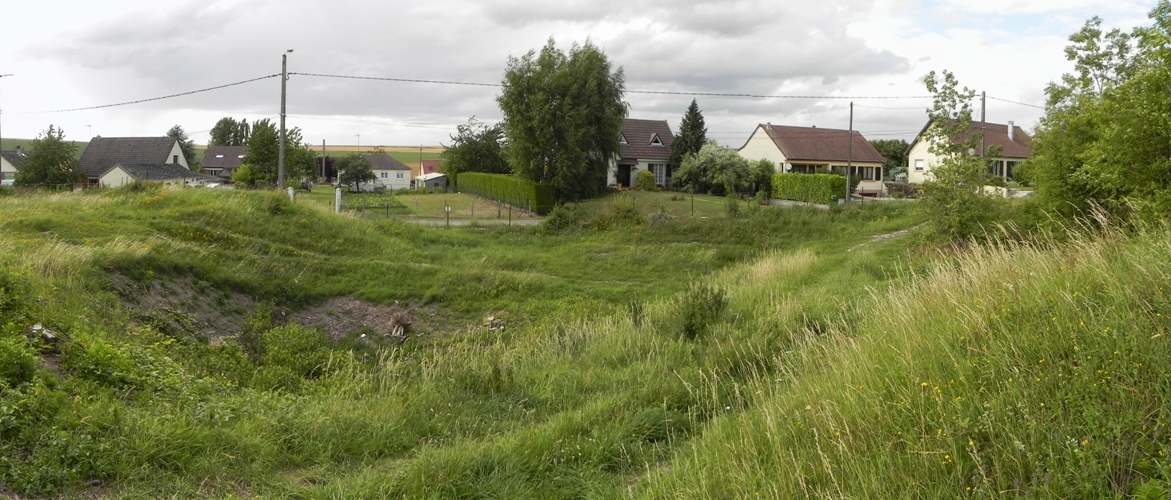
The Glory Hole at La Boisselle. Overlooking the site of the Granathof.
We then headed east through the battlefield, past Contalmaison, Longueval and Guillemont to the Cedric Dickens cross at Ginchy overlooking Leuze and Bouleaux Woods. This was a special stop for one of the group whose grandfather had served with the 1/8th Middlesex Regiment and who had probably been in these very fields in mid-September 1916.

Jack & John with Bouleaux Wood in the background. John’s grandfather served here in September 1916 with the 1/8th Middlesex Regiment.
Our final stop of the day was to the site above Mametz of our successful archaeological dig for a Livens Large Gallery Flame Projector where I could stand my clients on the spot where the parts had been recovered in May 2010. Sadly we did not have time to all visit the Historial de la Grande Guerre at Peronne to see the temporary exhibition and salvaged projector parts as well as the full size replica but there is only so much we could do within the time constraints.
“I would just like to say a big thank you for making our battlefield tour such an interesting and amazing event. Your knowledge of the area and what went on and where, is just incredible. The tour was made that much better by the fact that you had researched my Grandfather’s service in the Middlesex Regiment and proceeded to show us exactly where he was and what he would have experienced almost to the day but 95 years ago. It made the hair stand up on the back of my neck!
The choice of locations that you picked were excellent, and whilst I know two days is not long enough to cover everything there is to see, we certainly got a very good understanding of what happened, by whom and where. This was made even more poignant by linking them to my ancestors who had fought there. I would have no hesitation in recommending your tours to any of my friends, in fact I have told them of my experience with you and we are already planning another tour for next year.” John Waterman, Kent
It was a terrific trip with delightful people who have clearly got the battlefielding bug. My thanks to John, Clare, Sally and Jack for their enthusiasm, understanding and for sending me a selection of photos. I am already looking forward to the next time…